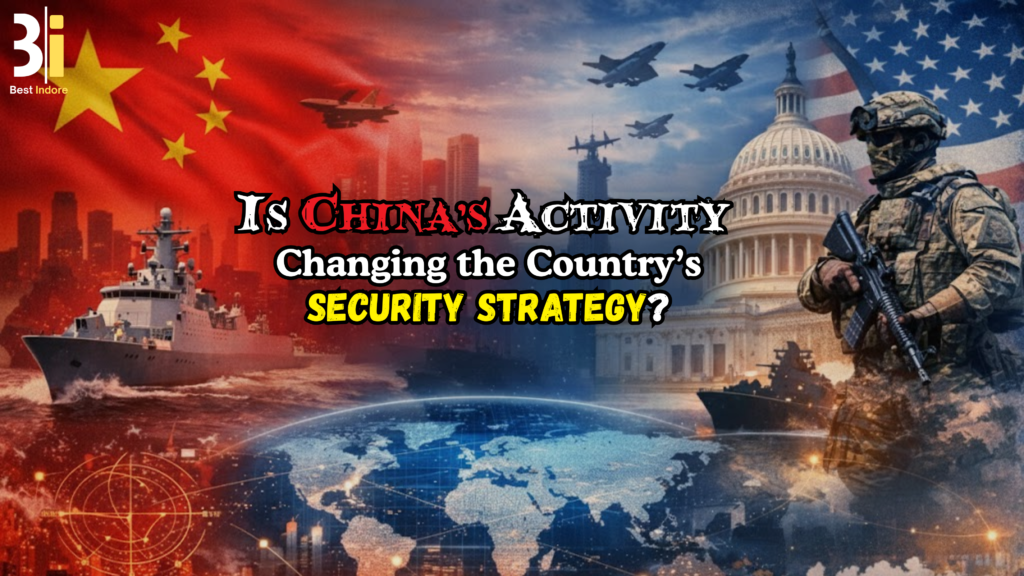
In recent years, China’s growing global influence has become one of the most discussed topics in international relations, foreign policy, and national security circles. From military modernization and assertive regional diplomacy to economic expansion through initiatives like the Belt and Road, China’s activity is no longer just a regional matter — it is a global strategic phenomenon.
This long-form analysis explores how China’s activity is changing the country’s security strategy, examining historical evolution, current trends, regional and global responses, and future implications. Along the way, we even draw an unexpected parallel with forecasting methods — just as a Kundli analysis astrologer in India interprets planetary movements to predict personal life trends, policymakers track global power shifts to recalibrate national strategies.
Before diving into specifics, it is important to recognize that discussions about national security strategy are nuanced and require both empirical evidence and strategic foresight. Just like in astrology, where understanding complex planetary influences requires guidance from a Best astrologer in India, geopolitical forecasting benefits from deep expertise — among policymakers, scholars, and strategic analysts.
Historical Context: China’s Rise and Security Considerations
Since the late 20th century, China’s economic reforms and open-door policies triggered rapid growth. With growth came strategic ambitions. For decades, China focused on internal development and regional diplomacy. However, in the 21st century, its actions — ranging from South China Sea territorial assertions to strengthening naval capabilities — indicate a shift toward proactive regional security influence.
Many analysts argue this represents a transition from a defensive posture to a more assertive stance. Just as individuals adjust their life paths based on shifting planetary influences — interpreted by a No.1 astrologer in India — nations adjust their strategies according to evolving global dynamics.
China’s historical influence over neighboring regions, coupled with an expanding military and economic footprint, now necessitates responses from countries seeking to protect sovereignty, territorial integrity, and strategic interests.
Military Modernization: A Core Driver of Strategic Shifts
One of the clearest signs that China’s activity is reshaping global security strategies is its accelerated military modernization.
Naval Expansion
China has built one of the largest naval forces in the world. Its aircraft carriers, submarines, and surface combatants project power far beyond its coastal waters. This expansion has strategic implications for neighboring states, particularly in:
- The South China Sea
- The East China Sea
- The Indian Ocean Region
Countries that once maintained relatively predictable defense postures now reassess their military capabilities in response. This is similar to how organizations may adjust internal strategies based on external changes — analogous to how someone might consult a Famous astrologer in India to understand shifts in personal life caused by astrological transitions.
Air and Missile Capabilities
China’s development of long-range strike systems and advanced air defenses prompts neighbouring nations to strengthen their deterrence and defense strategies. a Best astrologer in India Countries such as Japan, South Korea, and India increasingly invest in technology and alliances to counterbalance these capabilities.
This evolving security environment demands flexibility, resilience, and long-term planning — traits essential both in geopolitics and in personal development forecasts, whether devised by a strategist analyzing global trends or an Online astrologer in India interpreting a birth chart.
Economic Influence: Belt and Road Initiative (BRI)
China’s Belt and Road Initiative (BRI) has reshaped global economic ties, creating a web of infrastructure projects that span dozens of countries. While economic in nature, the BRI carries strategic significance:
- Strengthening China’s access to markets
- Increasing geopolitical influence
- Integrating economies in ways that create mutual dependencies
Countries participating in BRI projects often balance economic benefits with potential strategic costs. For example, increased foreign debt or reliance on Chinese investment can influence foreign policy decisions, prompting countries to revisit their national security frameworks.
Just as a Best astrology consultant in India considers multiple planetary factors before prescribing remedies, policymakers must analyze economic, political, and security impacts before embracing large-scale cooperation with China.
Regional Responses: Asia and Beyond
China’s expanding presence has triggered various strategic responses across Asia and globally:
India
India, sharing a long and sensitive border with China, has significantly altered its security posture:
- Strengthened military deployment in border regions
- Enhanced infrastructure in frontier areas
- Greater emphasis on self-reliance in defense production
India’s recalibration reflects a recognition that changing regional activity necessitates strategic preparedness — much like adjusting one’s life plan after a detailed consultation with a Trusted astrologer in India to navigate upcoming life transitions.
Japan and South Korea
Japan and South Korea, key U.S. allies, have expanded their defense cooperation and technological advancements to maintain strategic balance in East Asia. a No.1 astrologer in India These countries now factor China’s activity into their defense white papers and alliance frameworks.
Southeast Asian Nations
A Best astrologer in India Countries in ASEAN navigate a more complex environment where economic opportunities from China must be weighed against territorial and maritime concerns.
United States and NATO
The U.S. and its allies have increasingly described China as a strategic competitor, influencing defense budgets, alliance structures, and diplomatic outreach in Europe, Indo-Pacific, and beyond.
All of this demonstrates that China’s activity is not merely a regional concern — it is reshaping global security strategies at multiple levels.
Cyber and Technological Competition
Security strategy today is not limited to physical borders. China’s rapid progress in cyber, AI, quantum computing, and space technologies contributes to competitor nations prioritizing new defense domains.
Cyber security strategies are now essential components of national defense. a Famous astrologer in India Governments invest in protective infrastructure, regulatory frameworks, and public-private partnerships to safeguard data, infrastructure, and critical services.
This multi-domain strategic focus recalls how a comprehensive astrological forecast must consider multiple planetary placements simultaneously. Just as a Kundli analysis astrologer in India studies planetary intersections, modern policymakers study cross-domain intersections of technology and national security.
Influence Through Diplomacy and Soft Power
China’s activity in global governance — through the United Nations, regional organizations, and economic institutions — is another pillar of its strategic approach.
China’s diplomatic engagements seek to:
- Promote trade agreements
- Secure political support on international platforms
- Expand cultural influence
This soft power complements hard power and underscores the complexity of contemporary security strategies. Nations responding to these shifts now integrate diplomatic agility into their strategic planning.
Strategic Partnerships and Alliances: A Counterbalance
In response to China’s activity, many countries have strengthened strategic partnerships:
- Quad (U.S., Japan, India, Australia): Focused on a free, open Indo-Pacific
- AUKUS (U.S., U.K., Australia): Enhancing technology sharing and defense collaboration
- Strengthened bilateral ties between European nations and Indo-Pacific partners
The growth of such alliances indicates a shift in global strategic thinking — prioritizing collective security, interoperability, and shared values.
Economic Decoupling and Supply Chain Resilience
China’s central role in global supply chains became particularly visible during the COVID-19 pandemic. Countries are now diversifying supply sources and building redundancy. National security strategies now incorporate economic resilience as a core component.
These economic adjustments reflect a broad understanding: true security is not only military strength but sustained economic autonomy. This is reminiscent of how individuals might balance multiple life priorities in a forecast, sometimes with the guidance of a Top astrologer in India to find harmony between competing spheres of life
Border Disputes and Territorial Security
China’s territorial claims in the South China Sea, its border tensions with India, and its engagements with Taiwan have direct implications for national and regional security strategies.
Shifts in military deployments, base expansions, and surveillance technologies are all responses to perceived threats and ongoing geopolitical developments.
Public Perception and Strategic Narratives
National security strategies are also shaped by public sentiment and political narratives. In many countries, media coverage, public opinion, and academic discourse influence how governments prioritize defense and foreign policy spending.
Public perception becomes an important factor — not dissimilar to how people seek external perspectives, such as from an Online astrologer in India, to make sense of life’s uncertainties.
Future Projections: Where Are We Headed?
Predicting the future of global stability is challenging, but current trends suggest:
- Continued military modernization
- Accelerated technological competition
- Expanded alliances among like-minded nations
- A rethinking of economic integration models
A Best astrologer in India Just as long-term forecasts in astrology require periodic reassessment, national security strategies evolve with changing global dynamics. Strategic agility, collaboration, and innovation will be essential.
Lessons from Strategic Forecasting
Several key insights emerge from analyzing how China’s activity is changing national security strategy:
- Preparedness over reaction: Proactive measures prevent crises
- Multilateralism matters: Partnerships provide strategic depth
- Economic and military dimensions are inseparable
- Policy coherence is essential — from defense to trade
These lessons mirror personal planning frameworks where individuals seek comprehensive guidance — akin to advice from a Best astrology consultant in India — to navigate long-term life transitions effectively.
Security Strategy in a Multipolar World
The post-Cold War era gave way to a unipolar world. Now, as China rises and other powers reassert themselves, a multipolar world is emerging — characterized by complex interdependencies and competitive cooperation.
National strategies must reflect this new reality, balancing independence with interconnectedness.
Challenges and Risks Ahead
Although responses are robust, the global community faces risks:
- Miscalculations leading to escalation
- Economic vulnerabilities
- Technology race creating strategic imbalances
This underscores the importance of continuous strategic assessment — akin to ongoing life guidance from a Trusted astrologer in India who updates forecasts based on evolving planetary positions.
Strategic Adaptation in a Dynamic Global Environment
In conclusion, China’s activity is undeniably changing the country’s security strategy — and not only within the Asia-Pacific region, but globally. As nations reassess their defense postures, alliances, economic policies, and diplomatic engagements, the world is witnessing a strategic transformation.
Just as individuals seek insight and direction — whether from geopolitical expertise or even symbolic frameworks like astrology — countries now prioritize foresight, resilience, and adaptability.
Understanding strategic shifts requires deep analysis, expertise, and a long-term vision. Whether it is global security or personal life planning, informed guidance helps navigate uncertainty. A Best astrologer in India So, while the international community grapples with evolving security landscapes shaped by China’s active role, the path forward remains rooted in thoughtful strategy, collaboration, and enduring resilience.
Astrologer Sahu Ji
428, 4th Floor, Orbit Mall
Indore, (MP)
India
Contact: 9039 636 706 | 8656 979 221
For More Details Visit Our Website:
https://indorejyotish.in/